

Information
Dr. García-Sastre is Professor in the Department of Microbiology and Director of the Global Health and Emerging Pathogens Institute of Icahn School of Medicine at Mount Sinai in New York.
For the past 25 years, his research interest has been focused on the molecular biology of influenza viruses and several other negative strand RNA viruses. During his post-doctoral training in the early 1990s, he developed, for the first time, novel strategies for expression of foreign antigens by a negative strand RNA virus, influenza virus. He has made major contributions to the influenza virus field, including 1) the development of reverse genetics techniques allowing the generation of recombinant influenza viruses from plasmid DNA, (studies in collaboration with Dr. Palese); 2) the generation and evaluation of negative strand RNA virus vectors as potential vaccine candidates against different infectious diseases, including malaria and AIDS, and 3) the identification of the biological role of the non-structural protein NS1 of influenza virus during infection: the inhibition of the type I interferon (IFN) system.
In 2005, he became a Fellow of the American Academy of Microbiology, and in 2009, he received the Beijerink Professorship from the National Academy of Sciences of the Netherlands. In 2011, he has been elected President of the International Society for Vaccines, for 2014 and 2015. In 2017, he has been elected a fellow of the Royal Academy of Pharmacy in Spain.

Information
With a degree in Sociology from the University of Salamanca, he is currently Advisor in the Cabinet of Minister Elma Saiz, in the Ministry of Inclusion, Social Security and Migration. He is also a member and member of the Board of Directors of the Provivienda Association and external evaluator of the Spanish Journal of Development and Cooperation of the University Institute of Development and Cooperation of the UCM (IUDC-UCM).
He was previously a Sociologist and later Advisor in the Cabinet of Minister José Luis Escrivá, in the Ministry of Inclusion, Social Security and Migration, and has also worked as a Freelance Sociologist, as a Research, Evaluation and Advocacy Technician at the Provivienda Association, as Director of Public Affairs at Sigma Dos and as Senior Research and Strategic Monitoring Consultant at ATREVIA – Consultancy and Communication Agency, among others.
Alberto López Casillas


Information
Graduate in Medieval History (Complutense University, 1990), and PhD in History from the University of Edinburgh with a thesis entitled The Fortress of Faith. The Perception of Muslims in Fifteenth-century Spain (1995), Ana María Echevarría Arsuaga is currently Professor of Medieval History in the Department of Medieval History and Historiographic Sciences and Techniques at the UNED.
She has authored a large number of scientific articles, books and other contributions to collective works, that can be accessed here, and she has also worked for several years in the publishing sector, and is one of the creators of Temple, one of the first web pages dedicated to medieval history (1998, more than 20,000 visits).
She has also been Visiting Professor at the NYU Programme in Madrid and at the Senior University of the Catholic University of Avila.

Information
Ángel Canal Alonso is currently a researcher at the University of Glasgow in the Microelectronics and Implantable Devices Laboratory (meLAB).
He specialises in the development of techniques based on biomimetics to reduce the negative effects of deep brain stimulation (DBS) and neuro-modulation in different pathologies such as epilepsy and Parkinson’s disease. To this end, it develops treatments based on Artificial Intelligence and mathematical models focused on the analysis of brain signals and stimulation signals. At the same time, he designs several bioactive polymers for the coating of neural probes and stimulation devices.
He has worked at universities and research centres such as the University of Salamanca, the International Artificial Intelligence Research Foundation (AIR Institute) and the Institute of Biomedical Research of Salamanca (IBSAL).

Information
Antonio Tabernero studied Chemical Engineering at the USAL, carrying out his doctoral thesis with an FPI grant in the Department of Chemical Engineering at the same University on the micronisation of drugs using supercritical CO2. Subsequently, she worked on the production and processing of polysaccharides with supercritical CO2 to obtain membranes and aerogels for biomedical applications, encapsulating different drugs and studying their release through porous materials. During this period, he carried out research stays at the University of New South Wales (Sydney, Australia) and at the University of Salerno (Salerno, Italy).
He is currently Associate Professor in the Department of Chemical Engineering at the University of Salamanca and his research is mainly focused on the development of drug delivery systems, processing of polymers with supercritical CO2, and on how the rheological properties of polymeric solutions affect both the formation of gels and the final properties of any polymeric material obtained after treatment with supercritical CO2.

Information
Graduated in Law from the University of Salamanca and PhD in Law from the Complutense University of Madrid, she was Professor of International Public Law and International Relations at the University of Salamanca between 1986 and 2011 and, since then, at the Complutense University of Madrid.
During her time at the University of Salamanca she was also Director of the European Documentation Centre and Director of the Department of General Public Law and obtained the Jean Monnet Chair awarded by the European Commission in the first promotions (1991).
She is Doctor Honoris Causa of the National University of Cordoba, Argentina (2004), the Nebrija University of Madrid (2023) and will be invested Doctor Honoris Causa by the University of Salamanca in the spring of this year 2024.
She has also received other awards and recognitions, such as the Castilla y León Prize for Social Sciences and Humanities 2017, the XXVII Pelayo Prize for Jurists of recognised prestige in 2021 and the Julián Marías Research Prize 2022 for scientific career in the Humanities (awarded on 28.02.2023), and has a very extensive scientific production of high quality, which can be consulted on her website.
Information
Documentary filmmaker with extensive experience in the audiovisual field, in which he has developed almost his entire professional career.
He works in informative television programmes and entertainment productions and has also worked as a film researcher for film and video art productions, such as The Silence of Others, directed by Almudena Carracedo and Robert Bahar, with executive production by Pedro Almodóvar among others, winner of more than 40 awards, including the Emmy for Best Documentary and the Emmy for Best Political Documentary, as well as the Goya for Best Documentary 2019.
Information
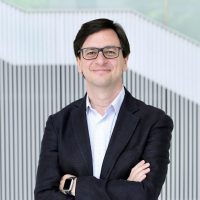
Esteban Moro is a Professor at Northeastern University’s Institute for Network Science and a Research Affiliate at MIT MediaLab.
He was previously a lecturer and researcher in the Department of Mathematics at the Universidad Carlos III de Madrid, at the Massachusetts Institute of Technology’s Sociotechnical Systems Research Center, and at Oxford University. He holds a PhD in Physics and is an affiliate professor at the UC3M-Santander Joint Institute on Big Data and at the Institute of Mathematical Sciences, Spain.
Esteban’s work lies at the intersection of big data and computational social science, with a focus on human dynamics, collective intelligence, social networks and urban mobility in problems such as viral marketing, natural disaster management or economic segregation in cities. He has received numerous awards for his research and his work has appeared in leading journals and is regularly covered by the media.
Information
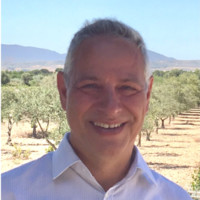
Fernando Goffman is the CEO and Founder of Seedcraft, a contract research organization (CRO) and a consultancy company that offers a wide range of services in the areas of Seed Science and Technology. For the last 3 years, Seedcraft is providing consultancy services in the area of hemp and Medicinal Cannabis.
He is an experienced plant scientist with broad knowledge in crop sciences, plant genetics & biochemistry, plant physiology, phytochemistry and small-molecule drug discovery and has also work for Ernst Benary Samenzuch GmbH (Germany), Enza Zaden Seed Operations B.V. (Netherlands), Philip Morris Int. R&D (Switzerland) and several other companies in the United States and Argentina.
He has innovative & strategic thinking, strong hands-on experience, multidisciplinary knowledge, result-oriented, team work, leadership & organization
Information
Javier Godar is currently a Senior Research Fellow at SEI. He co-founded the Trase platform and leads the development of the SEI-PCS approach that underlies the information provided by Trase.
During the last 15 years he has been focused on understanding transitions towards more sustainable land-use systems in the forested tropics, with especial focus in South America. Recent work on this issue has been supported by three different grants from the Swedish Research Council Formas, looking at actor-specific deforestation outcomes in the Amazon, land-base emissions and biodiversity impacts associated to global demand of tropical forest-risk commodities, and land leakage in the soy and beef sectors in South America. The main goal of this research is to increase our understanding of social-ecological systems in tropical forested areas, to better inform rural development and deforestation policies.
More recently Javier focuses also on mapping for the Trase platform the flows of globally traded commodities, such as soy, beef or palm oil; the aim is to identify their regions of production and to allocate the impacts generated along the supply chain (e.g. deforestation, biodiversity losses, transportation emissions) to the actors demanding those products downstream (e.g. traders, consumers, investors).
Information
Joaquín Pérez Melero is currently Chief of the Department of Description and Conservation of the General Archive of Simancas.
He holds a degree and PhD in History from the University of Salamanca and has been assistant professor at the University of Salamanca, the Pontifical University of Salamanca and the Simancas University Institute of History at the University of Valladolid.
Since 2005, he has been an Archives Faculty member at the General Archive of Simancas and has held his current post since 2010.

Information
Juan Antonio Vizcaino is currently the Proteomics Team Leader at the EMBL-European Bioinformatics Institute (EMBL-EBI, Cambridge, UK), responsible of the development and maintenance of the PRIDE database, one of the world’s foremost public repositories for mass spectrometry (MS)-based proteomics data (http://www.ebi.ac.uk/pride/archive).
In addition, from January 2011 he has been the manager of the ProteomeXchange Consortium, aiming to standardize data submission and dissemination in proteomics resources. He has also contributed to the development of proteomics data standard formats (mzIdentML, mzQuantML, mzTab) and related software, and have participated in the development of several data deposition (e.g. PX submission tool, PRIDE Converter and PRIDE Converter 2) and visualization (PRIDE Inspector) tools. Furthermore, he has coordinated the development of the “PRIDE Cluster” spectral clustering algorithm and have participated in the maintenance and refinement of widely-used services such as PICR (Protein Identifier Cross Reference) and OLS (Ontology Lookup Service). He has been the lead author of high impact papers in Nature Biotechnology, Nature Methods and Molecular and Cellular Proteomics, among other journals. So far, he has co-supervised two Ph.D. students and has also contributed to training activities in a regular basis.
Originally, he earned undergraduate degrees in Pharmacy and in Biochemistry, a Master’s degree in Microbiology, and a doctoral degree in Molecular Biology from the University of Salamanca, Spain. Afterwards, he held post-doctoral positions at the University of Seville (Spain) and at EMBL-EBI.

Information
Luis Santos is full professor at the Leibniz University of Hannover (Germany) since 2006.
Previously he was professor at the University of Stuttgart from 2004 to 2006. He received his PhD at the University of Salamanca in 1998, and was first postdoc (1999-2001) and the independent research leader (2001-2004) at the University of Hannover.
Professor Santos main focus of research is the theory of ultra-cold quantum gases, a field at the interface between atomic physics, quantum optics and condensed-matter physics. He has authored more than 200 peer-review papers, on topics that include among other Bose-Einstein condensation, dipolar quantum gases, strongly-correlated atoms and molecules in optical lattices, and quantum simulation. His scientific production can be accessed through his ORCID, here.

Information
Olga Gandelman, Phd, MBA, has over 40 years of research and development split equally between the distinguished academic institutions and small and medium-size biotech enterprises (SMEs) in the UK.
She specialises in taking breakthrough scientific research all the way from the biomarker discovery and novel analytical platform development to innovative in vitro diagnostics (IVD) product development and commercialisation.
Her areas of expertise include all aspects of developing diagnostics for infectious diseases, chronic liver disease, oncology and gut health using genomic, epigenetic, proteomic and volatolomic approaches. She has authored 20+ publications in peer-reviewed journals, filed 10+ patents, immersed in the biggest in Europe Cambridge (UK) biotech cluster and has a vast experience in leading scientific R&D teams and programs and mentoring younger scientists.
Mohamed Zaki
Information
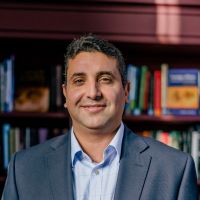
Professor Mohamed Zaki is the Deputy Director of the Cambridge Service Alliance at the University of Cambridge, a research centre that brings together the world’s leading firms and academics to address service challenges. He serves as a member of the editorial advisory board of the Journal of Service Management.
Mohamed received his PhD in Business Analytics from the Alliance Manchester Business School at the University of Manchester in 2013. Since then, his research interests have centred on digital service transformation, particularly the application of artificial intelligence (AI), to design and manage customer experience and create new data-driven business models.
Mohamed has more than 100 publications in highly ranked service management journals, such as the Journal of Service Research, Journal of Service Management, Journal of Business Research, International Journal of Operations and Production Management, PloS ONE, Expert Systems with Applications, Journal of Services Marketing as well as practical outlets such as Harvard Business Review.
Mohamed raised over £8 million from the research council and industry to fund his research. He is a recipient of many international awards. Mohamed has also consulted and lectured for over 50 organisations, including Manchester United, Mitsubishi Heavy Industry, CEMEX, Caterpillar, IKEA, HCL Tech, Bouygues and many others.

Information
Dr. Ramos-Truchero is an Associate Professor at the University of Valladolid in the Department of Sociology and Social Work. She has a PhD in Sociology from the University of the Basque Country and a degree in Sociology from the University of Salamanca.
Her research career began in Rural Sociology and Agriculture with the study of the socioeconomic impact of rural development policies in the European Union and research on generational change in family farms in the Basque Country, the basis of her doctoral thesis. In recent years, her research interest has focused on the sociology of food. She has made important contributions to the study of inequalities in access to food in rural areas, the use of “eco-educational” gardens and their connection with food education, the implementation of sustainable food in schools, and the perception of sustainable diets in Spanish health professionals.
Currently, she investigates the influence of the food environment on the eating habits of adolescents in the cities of Madrid and Bilbao. In addition, she participates in the study of the Spanish population’s perceptions, attitudes and behaviours towards healthy, sustainable and fair food. She is a member of the Sociology of Food Research Group at the University of Oviedo, is part of the coordination team of the Observatory of the Right to Food in Spain (ODA-E) and is a member of the scientific committee of the Danone Spain Institute.
She has been President of the Research Commission on the Sociology of Food of the Spanish Federation of Sociology (FES) (2016-2020) and has represented Southern European countries as a member of RC 40. Agriculture and Food at the Association Sociology International (ISA).

Information
Dr. Joris van den Tol, FRHistS is an Assistant Professor of Economic History at Radboud University in the Netherlands. He obtained his PhD at Leiden University (2018) and has worked as a Postdoc at Harvard University (2019-2021) and the University of Cambridge (2022-2024).
He is an historian of Early Modern Economic and Social History, specializing in the Dutch Republic in a globalized world. His first book, Lobbying in Company (Brill, 2020) uses the Dutch colony in Brazil (1630-1654) as a case study for lobbying. It argues that (ordinary) people made a difference for history. Through lobbying (a combination of petitions, personal relations, and public opinion), individuals were able to influence the decision-making process. Lobbying alliances transcended boundaries of ethnicity, religion, geography, gender, and class. His second book (co-authored with Karwan Fatah-Black and Lauren Lauret) studies the involvement of the Dutch Central Bank (DNB) in slavery. With these two colleagues he has also worked on a book about the province South Holland and slavery.
Diego Valdeolmillos
Information
Diego Valdeolmillos Villaverde es Project Manager en AIR Institute, donde trabaja en el área de tecnologías de registro distribuido (DLT). Con siete años de experiencia en la gestión de proyectos, ha liderado más de 40 iniciativas multidisciplinarias en diversas industrias e investigaciones, desarrollando soluciones innovadoras en blockchain para la cadena de suministro y aplicaciones descentralizadas, incluyendo smart contracts, trazabilidad, oráculos, DAOs, DeFi, identidad descentralizada y arquitecturas de grafos acíclicos dirigidos (DAGs).
Es también coordinador y docente del máster en Blockchain y Smart Contracts de la Universidad de Salamanca, donde forma a profesionales en el uso avanzado de estas tecnologías. Entre sus logros, destaca el premio otorgado por la iniciativa IEEE Blockchain Spain al mejor proyecto en 2020, además de la implementación y el despliegue del primer contrato inteligente en la red blockchain TRON en 2018.
José Manuel Fradejas
Information
Alberto Marcos
Information
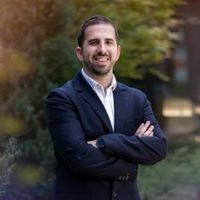
Alberto Marcos is an accomplished IT and cloud computing professional with over 16 years of experience. After earning his Bachelor’s degree in Computer Engineering from the University of Alcalá in 2010, he went on to build an impressive career in the technology sector. Alberto spent 10 years at Microsoft, where he held various roles including Education Technology Advisor, Education Cloud Solution Specialist, and Higher Education Account Executive. During this time, he developed deep expertise in cloud computing, with a focus on serving the education market. In 2021, Alberto joined Amazon Web Services (AWS) as a Senior Account Executive for the EdTech and Research verticals. In this role, he leverages his extensive knowledge of cloud technologies to help educational institutions and research organizations optimize their use of AWS services. Throughout his career, Alberto has demonstrated a strong passion for technology, astrophysics, and education. He also hold a Master’s degree in Astronomy and Astrophysics from VIU – Universidad Internacional de Valencia, further expanding his academic credentials.

Information
Lillian Barros is a Principal Researcher at the Centro de Investigação de Montanha (CIMO), Instituto Politécnico de Bragança and vice-coordinator of CIMO and vice-director of the Associate Laboratory SusTEC. She obtained her degree in Biotechnology Engineering (2002) at the Institute Polytechnic of Bragança and obtained her PhD “Doctor Europeus” in Pharmacy (Nutrition and Bromatology) at the University of Salamanca (2008). She has published more than 780 indexed papers, within the highest impact factor journals in Food Science and Technology area and has an 84 h‐index.
She has edited several books and book chapters, registered national and international patents, and is principal researcher of several national and international projects. Her scientific work has raised interest and has led to the supervision of several post-doc, PhD, and master students. She has received awards from several different organizations.
L.B scientific production has been very relevant and has reached top positions in the world rankings (Highly Cited Researcher in Clarivate since 2016). Her research targets are mainly in the identification, separation, and recovery of functional molecules from different natural products.
Web of Science ResearcherID: J-3600-2013
ORCID 0000-0002-9050-5189
Scopus Author 35236343600
Full CV
CIMO Webpage
Aurora Gómez
Information

Information
Ana B. Marín-Arroyo is an Associate Professor of Prehistory and she is Leader of the Human Evolution Group (EvoAdapta) at the University of Cantabria, Spain. Her research focuses on the evolution of human behaviour to different climatic and environmental conditions during the Pleistocene and Holocene with special attention to the human diet and human-animal relationship.
Since June 2019 she leds the SUBSILIENCE project (www.subsilience.eu) funded with an ERC Consolidation Grant. This project aims at reconstructing how climate and the arrival of AMH affected in Neanderthal decline, by analysing the human diet carried out of both human species and their subsistence adaptation to MIS3 climatic oscillations, in key sites located in the Southern European Peninsulas.
In 2011, she became a Fellow of the British Academy for the Humanities and Social Sciences at the McDonald Institute for Archaeological Research – University of Cambridge and elected a Fellow of the Darwin College in Cambridge.
Patricia Murrieta-Flores

Information
Patricia Murrieta-Flores (Doctora en Informática Arqueológica, Universidad de Southampton) es Catedrática de Humanidades Digitales en el Departamento de Historia, Directora de Investigación y Estrategia de Inteligencia Artificial de la FASS y Codirectora del Centro de Humanidades Digitales de la Universidad de Lancaster. Es arqueóloga histórica y especialista en la historia del México colonial temprano. Sus áreas de investigación han sido la arqueología del paisaje, las Humanidades Espaciales, y la creación y aplicación de métodos de Inteligencia Artificial para la investigación en Humanidades. Ha sido Investigadora Principal de múltiples proyectos internacionales financiados por organismos como la Plataforma Translatlántica de Humanidades y Ciencias Sociales, las Humanidades en el Espacio Europeo de Investigación, la Fundación Mellon, el Economic and Social Research Council y el Arts and Humanities Research Council, entre otros. Ha dirigido importantes proyectos interdisciplinares que integran métodos de aprendizaje automático, como «Digging into Early Colonial Mexico: Un análisis computacional a gran escala de fuentes históricas del siglo XVI» (2018-2022), »Unlocking the Colonial Archive: Harnessing Artificial Intelligence for Indigenous and Spanish American collections» (2021-2024), y más recientemente »The Fleets of New Spain: Profundizando en tres siglos de historia socioeconómica a través de la Inteligencia Artificial» (2024-2029). También ha sido becaria en instituciones como el Centro CAPAS de la Universidad de Heidelberg en Alemania con el proyecto «Mesoamerican Apocalypse: A large scale analysis of the Indigenous perspective on the sixteenth-century epidemics of Colonial Mexico» (2022-2023), y la Biblioteca del Congreso de Estados Unidos con el proyecto AHRC/NEH “Implementing Artificial Intelligence to unlock the Library of Congress Spanish American historical collections (1500-1699)” (2023-2024). Murrieta-Flores ha publicado múltiples libros editados y más de 90 artículos a lo largo de su carrera, y es asesora científica de consejos internacionales de investigación e instituciones gubernamentales de varios países como México, Japón, Polonia, Reino Unido, Países Bajos y Suiza, entre otros. Actualmente trabaja con sus grupos de investigación y estudiantes en la creación de tecnologías decoloniales.
Eduardo Balsa Martínez
Information
María Sánchez Vidal
Information
María Sánchez Vidal holds a PhD in Economics from the University of Barcelona and is a founding partner at KSNET (www.ksnet.eu), a company dedicated to knowledge transfer and policy evaluation. Previously, she worked as a researcher at the Centre for Economic Performance of the London School of Economics and as a lecturer at the University of Konstanz (Germany). She is a specialist in public policy evaluation and has led projects for public, private and third sector institutions, especially in the fields of labour and urban economics and social protection and childhood poverty.
Anais González Iglesias